Google Top Banner

Friday, October 4, 2013

Dharamsala

Home of Dalai Lama & travelers' base camp
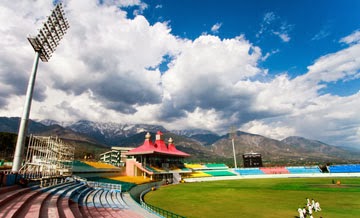

Set against the backdrop of the dramatic Dhauladhar mountains, Dharamsala is perched on the high slopes in the upper reaches of Kangra Valley. The town is divided into two distinct and widely separated sections, Upper and Lower Dharamsala, which differ almost a thousand meters in height.
Dharamsala has become synonymous with the Tibetan government in exile and the home of Tibetan leader Dalai Lama. Even if the Tibetan community dominates the town, it has still retained the colonial lifestyle and British fervor.

Dharamsala overlooks the plains and is surrounded by dense pine trees and Deodar forests. A nearby snowline with numerous streams and cool healthy atmosphere makes the surrounding very attractive.
Dharamsala is a busy bazaar town and has established itself as the travelers' base camp, who come to explore the nearby mountains. The Kotwali Bazaar provides the entire color and characteristic of a small town, which is mixed with simple lifestyle. 

The colorful temple and Gompas which reflect the culture of Tibet add attraction for the visitor. The Kangra museum gives an overview of the rich past of the region. There are institutes that have been established to preserve Tibetan art, cultures and traditions.

Attractions: 
St. John's Church in Wilderness: 7-km upward from Dharamsala, between Forsyth Ganj and Mcleod Ganj lies the charming St. John's Church. It was built in 1852 and is dressed in grey stone with some fine Belgian stained glass windows donated by Lady Elgin. The church is popularly known as the church of St. John in Wilderness.

Chamunda Devi Temple: Mere 15-km from Dharamsala in a tiny village of Dadh on Palampur Road is the famous temple dedicated to Goddess Chamunda Devi. It is an enchanting spot with glorious views of the mountains, the Baner Khud, Pathiar and Lahla forests. 

Maharana Pratap Sagar: Named in honor of the great patriot 'Maharana Pratap' (1572 - 97 AD), the Maharana Pratap Sagar was once known as the 'Pong Dam Reservoir'. India knows the 'Maharana' as a man who struggled valiantly for his kingdom of 'Mewar' for the principle of independence. In the words of the Chroniclers James Tod and William Crooke, "He spurned every overture that had submission for its basis". Over the river Beas, the "Pong Dam" was completed in 1976. Its reservoir has an area of about 45,0000 hectares at maximum possible flooding - the level varies with every season and averages around 30,000 hectares. Over 2,000 villages with a population of over 85, people are lying along the wetland.
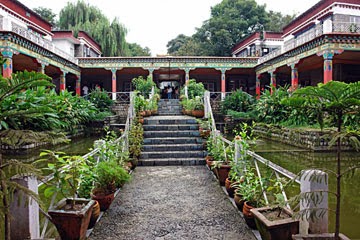
The Wildlife Sanctuary: In 1983, Maharana Pratap Sagar was declared a wildlife sanctuary and over 220 species of bird belonging to 54 families have been sighted over the waters and the fringing mud-banks. These include black-headed gulls, plovers, terns, ducks, water-fowl and egrets. The first sighting in the region of the red-necked grebe was made at the Sagar. 


The wetland's location at the head of the Indian plains has made it a suitable habitat and stopover for migratory birds that enter India from Central Asia. The land portion of the sanctuary has barking deer, sambar, wild boars, nilgai, leopards and clawless otters. Twenty-seven species and sub-species of fish belonging to six families have been recorded in the Sagar's waters. Some of the important commercial varieties are - Labeo dero (Gid), Labeo rohita, Labeo Calbasu, Tor putitora (Mahsir), and Mystus seenghala (Singhara). Since 1976, fishing has been a major economic activity in the areas and today it provides employment to some 1,500 fishermen and the annual catch is valued at over a crore of rupees.

Norbulinka Institute: Just 4-kms from Dharamsala is Norbulinka. This place has heavy Japanese influence. The Norbulingka Institute of Tibetan Culture was founded by the Department of Religion and Culture to preserve and promote Tibetan art and culture in exile

Nurpur Fort: Originally known as Dhameri, 66-km from Dharamsala and 24-km from Pathankot, Nurpur Fort was renamed by Emperor Jehangir, son of the Great Moghul Jalal-Ud-Din Mohammad Akbar. The fort is now in ruins but still has some finely carved reliefs. 

Tsug-Lag-Khang (Central Cathedral): Though a plain and utilitarian substitute for its far more splendid namesake in Lhasa, also known as the Jokhang, the Tsug-Lag-Khang is nevertheless fascinating and peaceful. Situated opposite the residence of His Holiness the Dalai Lama, Tsug-Lag-Khang is known to local Indians as the Main Temple.

Andretta: Situated just 13-kms away from Palampur lies this dwelling place of artist S. Sobha Singh. It houses a gallery of some of his major works and a pottery center. 

Dall Lake: Surrounded by high and green Deodar trees is the lake, which fills a mountain bowl. Situated 11-kms away from the town, this lake is easily approachable by road and makes an enchanting and serene picnic spot. 

Dharmkot: Just 11-km away from Dharamsala, located on the crest of a hill lies this attractive picnic spot, which presents a panoramic view of the Kangra Valley and Dauladhar ranges

Kunal Pathri: These are the rock temples from which the place derives its name. Kunal Pathri is a 3 kms flat walk from Kotwali Bazaar. 

Best Time to visit: Mid-May to Mid-October.
How to Get There:
Air: Dharamsala can be approached by air from Delhi and the nearest Airport is at Gaggla, just 13-km away from the town.
Rail: Pathankot is 85-km and is the nearest railhead for Dharamsala. Trains from all over the country make a stop over at Pathankot and from here it is a three-hour journey to Dharamsala.
Road: From Manali bus services are available to this place. One can drive from Delhi via Chandigarh, Kiratpur, Bilaspur and it's an eight-hour journey. From Delhi and Shimla, luxury buses ply to Dharamsala.

Wednesday, January 2, 2013

Jodhpur


City of forts, palaces & colorful people

The history of Jodhpur revolves around the Rathore clan. Rao Jodha, the chief of the Rathore clan, is credited with its origin. He founded Jodhpur in 1459. The city is named after him only. It was previously known as Marwar. 

The Rathores were driven out of their original homeland, Kaunaj, by Afghans. They fled to Pali, near to the present day Jodhpur. Rathore Siahaji married the sister of a local prince. This helped the Rathores to establish and strengthen themselves in this region. In some time they ousted the Pratiharas of Mandore, just 9 km of today's Jodhpur. Initially, Mandore served as their capital, but, by 1459, Rathores felt the need for a secure capital. This lead to the formation of Jodhpur, the Sun City, by Rao Jodha.

The Rathores enjoyed good relations with all the Mughals, except Aurangzeb. Maharaja Jaswant Singh even supported Shahjahan in his struggle for succession. After Aurangzeb's death, Maharaja Ajit Singh drove out Mughals from Ajmer and added it to Marwar (now Jodhpur). Under the reign of Maharaja Umed Singh, Jodhpur grew into a fine modern city.

During the British Raj, the state of Jodhpur was the largest in Rajputana, by land area. Jodhpur prospered under the British Raj. Its merchants, the Marwaris, flourished endlessly. They came to occupy a dominant position in trade throughout India. In 1947 India became independent and the state merged into the union of India. Jodhpur became the second city of Rajasthan.

Jodhpur Culture
Jodhpur is set at the edge of the Thar Desert. This imperial city echoes with tales of antiquity in the emptiness of the desert. A high wall – 10 km long with eight gates and innumerable bastions encompasses the city. It was once a major trade center. Jodhpur is now the second largest city of Rajasthan.

Regarding the Jodhpur culture, the Jodhpuri people are amongst the most hospitable in India. They have a typical Marwari accent. The lifestyle in Jodhpur, India is quite fascinating. The folks there wear lovely multihued costumes. The women folk wear wide gathered skirts and a hip length jacket, with three quarter length sleeves, covering the front and back. Women also love to wear jewelry on many parts of their body. They wear specific type of jewelry like the ones worn on the feet, head, forehead, ear, nose, neck, arms, wrist, fingers, waist, etc. Another unique feature of the culture of Jodhpur is the colorful turbans worn by men. The popular tight, horse riding trousers, 'Jodhpurs', took their name from this city only. The main languages spoken here are Hindi, Marwari and Rajasthani.

The graceful palaces, forts and temples strewn throughout the city bring alive the historic grandeur of this city. Lending a romantic aura to Jodhpur, are its exquisite handicrafts, folk dances, folk music and the brightly attired people. The desert people are quite friendly. With their sweet smiles and warm hospitality, they win the hearts of tourists. The famous Marwar festival brings out the festive spirit of the people of this city. The bazaars of Jodhpur have a range of items from tie & dye textiles, embroidered leather shoes, lacquerware, antiques, carpets and puppets to the exquisite Rajasthani textiles, clay figurines, miniature camels and elephants, marble inlay work and classic silver jewellery.

Tourist Attractions 

The glorious past of Jodhpur is personified through various forts, palaces and other monuments of Jodhpur. The main places to see in Jodhpur Rajasthan are:

Mehrangarh Fort:
The most magnificent fort in Jodhpur is the Mehrangarh Fort. It is situated on a 150m high hill. Rao Jodha, the then chief of Rathore clan, constructed it in 1459. There are a number of attractions within the fort like palaces, galleries, a museum, temples and so on. 

Umaid Bhavan Palace:

One of the fascinating palaces of Jodhpur is the Umaid Bhavan palace. Maharaja Umaid Singh constructed it in 20th century. A part of the palace has now been converted into a hotel and a museum.

Jaswant Thada

Jaswant Thada lies to the left of the Mehrangarh fort complex. It is a royal cenotaph made up of white marble. It was built to commemorate Maharaja Jaswant Singh. Some rare portraits of the former rulers of Jodhpur are displayed here.

Fairs and Festivals 
Jodhpur fairs and festivals express the rich culture and traditions of Rajasthan. The most famous fairs and festivals are the Marwar Festival, Jodhpur International Desert Kite Festival and Nagaur Fair.

The Marwar festival is the most popular. And Nagaur Fair is almost the second biggest fair in India. The International Desert Kite festival, although quite recent, is very famous in and around India.

The Jodhpur fairs and festivals are celebrated with great enthusiasm. Be it young children or the old people, all of them take part in the pomp and show. They serve as a platform to perform local customs that have been there since times immemorial. 

Jodhpur Temples 

Religion and worship are deeply rooted in the people of Jodhpur. There are places of worship in Jodhpur for people of every religion – Churches for Christians, mosques for Muslims, gurudwaras for Sikhs and Jain temples for Jains. 
Among the famous Jodhpur temples are Chamundaji Temple, Raj Ranchhodji Temple, Achal Nath Shivalaya, Siddhanth Shiv Temple
Rasik Bihari Temple, Baba Ramdeo Temple, Udai Mandir and
Kunj Bihari Temple

How to Reach 

By Air: The Jodhpur Airport is 5 km from the city center. Regular flight services connect the city with other major cities in and around Rajasthan. There are daily flights to Delhi, Mumbai, Udaipur and Jaipur.

By Train: Jodhpur is well connected by railway lines. Trains to Delhi, Mumbai, Chennai and Kolkata are easily available. The 'Palace on Wheels' also visits this city of royal splendor.

By Road:  The main highway between Jodhpur and Jaisalmer is via Agoli and Pokaran. The highway is well connected with Agra, Ahmedabad, Ajmer, Delhi, Jaipur, Jaisalmer and Udaipur by bus.

Wednesday, August 8, 2012

The Great Migration – Kenya

The Wildebeest Migration in East Africa, also known as “The Great Migration” can be watched in Kenya’s Maasai Mara. It is one of the greatest wildlife spectacles on the planet. Each year around 1.5 million wildebeest and 300,000 zebra and various species of antelope gather up their young and start their long trek from Tanzania’s Serengeti plains to Kenya’s Maasai Mara National Reserve.


July to October, the grazing animals take a four-month-long trek towards the Mara River. In desperate need of water to drink and grass to graze, the countless herds need to cross the river to reach the lush, green grasslands in Maasai Mara. The world's most spectacular sight is the mass crossing of the swollen Mara River.

Maasai Mara is located in the South-western of Kenya, 290 kms from Nairobi. The abundance of wildlife and the remoteness of the reserve implant memories that no money can buy. Wildebeest Migration is a sight to behold on wildlife safari and it’s even more awesome watching it on the ground or with Mara balloon Safaris.

The Great Pyramids – Egypt

The most famous among the pyramids of Egypt are those incredible ones at Giza. These massive structures were built 4500 years ago, and they dominate the landscape around them. The Giza pyramids were built for King Khufu, Khafre and Menkaure; we even know what each of them looked like as archaeologists have found statues of them.

The Great Pyramid of King Khufu was originally 146 meters high; however, by time the capstone wore off and was replaced by a wooden tripod that indicates the original height. Now the height of the pyramid is 138 meters; it remained the tallest structure in the world for 3800 years. The pyramid was built around 2560 BC by King Khufu (fourth dynasty) over a period of 20 years. Hemon (Khufu’s vizier) is believed to be the architect of the great pyramid. King Khufu was seen as a living god, people respected him and obeyed his commands, But the only statue that remains of him is a very tiny one that can be seen at the Egyptian museum in Cairo, And his mummy was never found; May be because the real burial chamber is not yet discovered.

Wednesday, April 25, 2012

Colombo, Gulmarg, Tokyo

Colombo (Sri Lanka)
Colombo, Sri Lanka’s capital, biggest city and major port, draws together all the colours and cultures that make up this island nation, condenses them into a patchwork of markets, gardens and buildings both humble and grand, and knocks them against a narrow slab of beachfront. 
Many visitors will appreciate Colombo’s colonial heritage, its fine dining and shopping opportunities, and the dash of urban buzz in an overwhelmingly rural country. Others will tire quickly of the diesel fumes and the modern buildings on Galle Rd, the city’s main artery. There are plenty of cultural and historical attractions in areas such as Fort, Cinnamon Gardens and Pettah.


******************************************************************
Gulmarg (India)
About 52km southwest of Srinagar, the pine-fringed meadow at Gulmarg – literally ‘Meadow of Flowers’ – is a busy ski resort in winter and a popular walking resort in summer. The Alpine landscape is a marked contrast to the flat, poplar-lined fields that cover the bottom of the Kashmir Valley, but don’t expect a quiet retreat. Gulmarg is packed with domestic tourists year-round and most of the meadow is given over to a golf course that doubles as a training slope during the ski season. 


******************************************************************
Tokyo (Japan)
Life in Tokyo moves at a well-oiled clip, with an energy that borders on mania and an obsession with newness that seems to make all ideas quickly obsolete. Fashions begin to fade almost as soon as they are plucked from clothes hangers, and keitai (mobile phones) are traded up for each latest technological advancement. But even while throngs of tech-savvy, smartly styled Tokyoites trot through subway stations, there is a traditional side to this hyperurban cosmopolis, which may not be immediately evident. 

Monday, February 27, 2012

Courtallam, Natadola Beach, Franz Josef Glacier

Courtallam, Tamil Nadu, India
Courtallam, the 'Spa of the south', is situated at an elevation of about 167m on the Western Ghats in Tirunelveli District.  It is an excellent health resort and is famous for its water falls. It has an interesting legend. Devotees believes that Lord Shiva sent saint Agastheya to the south to avoid imbalance due to the over crowding in the mount Kailas on his celestial wedding.
The Peraruvi (Main Falls), Chitraruvi (Small Falls), Shenbaga Devi Falls, Thenaruvi (Honey Falls), Anitharuvi (Five Falls), Pazhathotta Aruvi, Puli Aruvi (Tiger Falls), Pazhaya Courtallam (Old Falls) are not only a tourist spot but also a famous health resort. Every year June to September one can enjoy the fall season. It contains lot of herbs which are good for health. Courtallam water has medicinal properties since the water runs through forests of herbs and the water has therapeutic qualities to cure physical ailments. During the fall season thousands of tourists from far and near visit this place.
Courtallam temple is dedicated to Lord Thirukutralanathar (Siva). This temple contains many inscriptions about Chola and Pandya Kings. Less than a furlong from here is a small temple called Chitra Sabha. Chitra Sabha (Hall of Pictures) dedicated to Lord Nataraja and decorated with paintings of rural deities and devotees, Puranic stories and religious events. The Sabha is one of the five Sabhas, where Lord Nataraja is said to have performed the cosmic dance.


*****************************************************************
Natadola Beach, Fiji
Gorgeous Natadola Beach is Viti Levu's best. Its vast bank of white sand slides into a cobalt sea, providing good swimming regardless of the tide level. If you want to snorkel, surf or windsurf, take your own gear. Natadola's strong currents often defy the brochures so instead of glassy, still conditions you may find sufficient churn for good body surfing. Take care; the varying conditions and undertow have caught out even experienced surf swimmers and readers have reported injuries. For non-swimmers Natadola is an utterly photogenic spot to zone out but watch your valuables as there have been reports of theft. 
Local villagers offer horse riding along the beach and sell green coconuts for drinking, and necklaces; unfortunately they can be pretty pushy. If you don't want to take them up on their offer issue a firm but polite 'no thank you' and put some distance between you and the car park. 


********************
Franz Josef Glacier, New Zealand
The early Maori knew Franz Joseph as Ka Roimata o Hine Hukatere (Tears of the Avalanche Girl). Legend tells of a girl losing her lover who fell from the local peaks, and her flood of tears freezing into the glacier.


The glacier was first explored by Europeans in 1865, Austrian Julius Haast naming it after the Austrian emperor. The glacier started advancing again in 1985 after a period of retreat.
The glacier is 5km from Franz Joseph village, the terminal face a 40-minute walk from the car park. Both Fox and Franz glacier faces are roped off to prevent people being caught in icefalls and river surges. The danger is very real, and in February 2007, two tourists were injured after being hit by falling ice when they ventured too close. Take a guided tour to get up close and personal.

Friday, January 27, 2012

Corbett National Park

Famous for wild population of tigers, leopards, elephants


Located in the foothills of the Himalayas is the majestic Corbett National Park. Home to a variety of flora and fauna, it is famous for its wild population of tigers, leopards and elephants. Corbett National Park was established in 1936, as the Hailey National Park. India's first national park and the first sanctuary to come under Project Tiger, Corbett supports a variety of vegetation making it the ideal habitat for the tiger and its prey.


Jim Corbett Wildlife National Park is a majestic place for nature and wildlife lovers. In this wildlife park you can choose the option of Elephant Safari or Jeep Safari. The park is situated on the bank of Ramganga River. Forests of Sal are very famous for this area. In this park thrive more than 600 birds, 50 mammals, and 25 reptiles. It is also very famous for elephants and tigers. More commonly seen wildlife includes the wild elephant, langur monkey (black face, long tail), rhesus macaque, peacock, and several type of deer including chital (spotted deer), sambars, hog deer and barking deer. There are also crocodiles, the odd-looking gavial or gharial, monitor lizards, wild boars and jackals. Leopards (referred to as panthers in India) are occasionally seen. The Jim Corbett Wildlife Sanctuary is also a bird-watcher’s paradise, and since the creation of the Kalagarah Dam on the Ramganga River, large number of waterfowl have been attracted here.


Once a popular hunting ground of the British, this 201 square mile park was named in honor of the late Jim Corbett, the legendary hunter-naturalist turned author and photographer who most of his years in this area had contributed in setting up the this park. With the help of the World Wildlife Fund, Project Tiger was launched in Corbett National Park in 1973 and it is one of the first such tiger reserves in the country.

Flora: The varied topography comprises hilly and riverine areas, temporary marshy depressions, plateaus and ravines. The lower areas are almost completely populated by Sal trees. In the Jim Corbett National Park are found 110 tree species. 


Major Wildlife Attractions
Corbett is a haven for tigers as well as its prey, which include four kinds of deer, wild boar and some lesser-known animals. Leopards are mostly found in the hilly areas of the park. Some nocturnal cats found here are the leopard cat, jungle cat and fishing cat. Sloth bear is found in the lower regions of the park while the Himalayan black bear is seen in the higher hills only. The dole or wild dog can be seen in the southern areas of the park along with the Jackal.

Some of the smaller residents of the park are Himalayan Palm Civet, Indian Gray Mongoose, Common Otter, Blacknaped Hare and Porcupine. Elephants are among the main attractions of Jim Corbett Park. Along the Ramganga River shores, one can spot the long-snouted, fish-eating Gharial, Crocodile and the ‘Mugger’ Crocodile. Also seen on the rocky hillsides is the Ghoral or Goat Antelopes. The Langur and Rhesus Monkeys are well distributed through out the park and warning the whole Jungle with alarm calls when they see either a tiger or leopard from tree-top perches.
Other Attractions

Ramnagar: Situated in the rich farm belt of Terai, on the southeastern fringes of the great forests, the busy market town of Ramnagar is the main administrative centre for Corbett National Park and Project Tiger. Ramnagar makes a fishing base camp. At Lohachaur, 15-kms north along the River Kosi, good anglers are in with a chance of landing the legendary Mahseer, a redoubtable battling River Carp. Permits to have a go must be sought from the Project Tiger office in Ramnagar. Most resorts also arrange all inclusive fishing trips.

Wildlife Viewing: Chital, Sambar, and various other deer species find refuge in the Savannah grasslands known as the Maidan, behind the campsite to the south, tigers are occasionally drawn in looking for prey. Two hour elephant rides explore this sea of grass, rarely penetrating far into the deep jungles beyond. Try to convince your Mahout or elephant driver to venture in, as they can be quite magical. Come at dusk or dawn; in the heat of the day you probably won’t come across much more than deer among the tall grass. Tiger-sightings are few and far between, but you may be rewarded with fresh pug marks.

Jeep Safari in Corbett: Jeeps Safari, is the most convenient way to travel within Corbett National Park, and can be rented for the park trips from Ramnagar, from the KMVN Tourist Lodge and other travel agencies. One bus each day goes to Dikhala from Ramnagar, stopping at the Forest Rest houses en route. Banking and other important tourist facilities are available at Ramnagar and Lucknow.
Note: Bring binoculars, remain quiet, and don’t wear bright colors or strong perfumes.

Best Time to Visit: The best visiting season of Corbett is from November 15 to June 15. Corbett remains closed between June 16 and November 14, when the monsoons flood the river beds and cut the fragile road links.


How to get there
Air: Phoolbagh, Pantnagar at a distance of 50-kms is the nearest airport. Delhi at a distance of 300-kms is the nearest international airport.

Rail: Ramnagar is on the broad gauge track from where the road transport options have to be availed to reach the park. For faster trains and connections to other parts change at Moradabad.


Road: Dhikala is 300-kms from Delhi, 145-kms from Lucknow and 51-kms from Ramnagar. The route from Delhi spans Hapur-Murababad-Ramnagar. The turn off is some 7-kms beyond Muradabad to the left, marked by a small board. The route from Lucknow spans Bareilly–Kichha–Rudrapur–Doraha–Kashipur. Ramnagar is served by frequent buses to and from Nainital and Ranikhet, 112-kms north. Buses arrive every half hour or so after the eight hour trip from Delhi; Delhi Transport Corporation runs a semi deluxe service, and most of the alternatives are pretty basic.

Entry Inside The Corbett National Park: Visitors are advised to reach the gate half an hour in advance to complete the formalities for entry into the park.

Friday, December 23, 2011

World Travel Destinations

Argentina


With its gorgeous landscapes, cosmopolitan cities and lively culture, Argentina is a traveller’s paradise. It stretches almost 3500km from Bolivia to the tip of South America, encompasses a wide array of geography and climates, and is almost the size of India. Nature-lovers can traverse the Patagonian steppe, climb South America’s highest peak, walk among thousands of penguins and witness the world’s most amazing waterfalls


Hikers can sample the stunning scenery of the lush Lake District – with its glorious lakes and white-tipped mountains – and revel in Patagonia’s glacier-carved landscapes and painted Andean deserts. City slickers will adore fabulous Buenos Aires, full of opportunities to learn Spanish, watch fútbol (soccer), dance the sexy tango and interact with dynamic and beautiful porteños (Buenos Aires locals). You’ll be out shopping for designer clothes at affordable prices and eating the world’s best steaks every day while partying at nightclubs all night long.

.......................................................................
 
Peru  


Peru is a land full of rich history, incredible natural beauty, and friendly people. You'll see the Spanish colonial architecture in Lima's historic centre, the beauty of Paracas Bay and the Ballestas Islands, the mysterious Nazca Lines, the mythical Lake Titicaca, and the condors of the Colca Canyon. You'll step back in time when you see the Inca ruins in Cuzco, the Sacred Valley, and Machu Picchu on a fascinating Peru tour.


 .......................................................................

Brazil
Sprawling across half of South America, Brazil has captivated travellers for at least 500 years. Powdery white-sand beaches, lined with palm trees and fronting a deep blue Atlantic, stretch for more than 7000km. Dotting this coastline are tropical islands, music-filled metropolises and enchanting colonial towns.


Inland, Brazil offers dazzling sights of a different flavour: majestic waterfalls, red-rock canyons, and crystal-clear rivers – all just a small part of the natural beauty. It’s larger and more famous attractions are the Amazon and the Pantanal, the pair hosting some of the greatest biodiversity on the planet. Wildlife-watching is simply astounding here, as is the opportunity for adventure – though you needn’t go to the jungle to find it. Kayaking, rafting, trekking, snorkelling and surfing are just a few ways to spend a sun-drenched afternoon in nearly any region in Brazil.

Tuesday, November 1, 2011

Most beautiful travel destinations of the world

Here are some:

Lakshadweep

One of world's most spectacular tropical island systems, Lakshadweep is tucked away at 220-440kms off the Kerala Coast. The islands offer a precious heritage of ecology and culture. The unique feature of the Islands is its coral reef, making it a pristine leisure spot to come back to. 4200 sq. kms. of lagoon, rich in marine wealth, is spread over 36 islands in an area of 32 sq. kms. The underwater view at Lakshadweep is kaleidoscopic and breathtaking.


The lagoon offers excellent potential for water sports like swimming, wind-surfing, diving, snorkeling and kayaking. No wonder, Lakshadweep is fast becoming India's one of its kind “Adventure sport – Nature Tourism” location. Each island is fringed by snow white coral sands. The crystal clear water and the abundant marine life enhance the beauty of these islands. Against the vast expanse of the blue sea, the islands look like emeralds. The huge shallow calm lagoon on one side with wall like reef made of marine live coral boulders blocks the incoming swells of the outer sea.


The islands are linked to the mainland by ship, helicopter, Indian Airlines, Kingfisher Airlines and mechanized sailing wooden vessels. The islands like Agatti and Bangaram can be reached by ship and air from Cochin. From Agatti, Kadmat and Kavaratti are linked by speed ferry. In all the islands, elaborate infrastructure is in place to meet the needs of tourists.

Lakshadweep was given the National Eco-Tourism Award 1997.

**************************
Mauritius


Mauritius is known for its coral reefs, sandy beaches and crystal clear beach water which make it a tourist paradise. It provides you with an opportunity to get involved in many aquatic activities such as scuba diving, sailing, parasailing, diving etc and is a paradise for beach lovers as well as water sports lovers. Apart from beaches, it also has historical monuments and wildlife. This breathtakingly beautiful island is situated in South West of Indian Ocean. The package tour to Mauritius takes you through some of the breathtaking attractions such as Casela Bird Park, Pamplemousses Park and Lle aux Cerfs Island.


Mauritius is also becoming the fast growing honeymoon destination. Its heavenly ambiance, cool amiable climate, fascinating charm and marvelous attractions have made it a honeymooner’s paradise.


 Among the attractions of Mauritius are:


• Grand Bay - The heart of the island’s nightlife. Also a first choice shopping and leisure destination.

• Pereybere - A public beach very popular among tourists especially for its shopping facilities, restaurants and pubs. Watersports are also available.

• Mont Choisy - The longest and largest public beach in Mauritius. It is much appreciated for its fine white sand and the facilities has to offer.

• Balaclava Ruins - The ruins of the old Balaclava estate.

• The Triolet Shivala - The longest village on the island, Triolet, is also home of the biggest Hindu temple, the Maheswarnath.


*************

Phuket


Phuket is Thailand's tourism crown jewel. What it offers covers the whole spectrum of activities, from the most decadent to the most spiritual. Whether a visitor is expecting earthy entertainment of Patong Beach, or meditation in a Thai monastery, Phuket has both and anything in between. All along the west coast of Phuket Island are lovely sandy beaches, bays and coves. These are the best beaches in Phuket. Although the Andaman Sea can get pretty rough at times, the west coast is the main focus of tourists to Phuket, with Patong Beach being the most happening place and the hive of tourism activity. The other beaches on the west coast offer a quieter retreat. Many tourists descend on Patong Beach for the nightlife and shopping, and then return to their resort rooms on the other beaches. The idea of a Phuket paradise may mean a luxury spa with a horizon pool merging with the sea.


All that tourism development in Phuket means that it is also one of the most expensive places in Thailand outside of Bangkok. Nevertheless, there is quality and good products on offer for that price. As far as tourists from rich countries are concerned, Phuket is still relatively cheap – you can enjoy fine dining in the best restaurant in Phuket, with quality food and service, at a much lower price than you could have done in any Western city. For the moneyed traveler, Phuket offers good value for the price.


****************

Bali

Bali in Indonesia is an example of co-existence between the cultures, landscapes and tourism development. It is known for mild climate in all seasons, white sand beaches, 10,000 temples, its interesting culture, the tropical jungle and especially the hospitality of the Balinese. Bali Island is known for its rich culture, beautiful Balinese dances and magnificent landscape panorama from the top hill down to the sea. The landscape consists of mountains, valley, lake, flat area and beautiful white sandy beach and warms blue seawater.


 This island offers holidays in a hinterland spread by rice fields on the volcanic slopes that are likely to be still active. There are vacation resorts on the most beautiful white sand beaches of the South as well as 5 star hotels in Bali. At the same time, the island offers water sports and sea activities such as snorkeling, surfing, diving, swimming, fishing among others.

A holiday in Bali is within the reach of all purses. The basic accommodation is not really expensive. Thus, with its vast beaches of the Indian Ocean, Bali remains a major destination for those wishing to explore new horizons.

Tuesday, September 6, 2011

Cherrapunji

Perpetual clouds, perpetual mists, perpetual rains


High above misty valleys and foaming rivers, ensconced in swirling clouds and perched on an escarpment, lies Cherrapunji (4,500 feet). This is a stunning location and the year-round rain earned Cherrapunji coveted entry long ago into the Guinness Book of World Records as the wettest place on earth, the place where the rainfall can be recorded in feet rather than in millimeters.

Today, climatic changes have edged Cherrapunji out of the topmost 'wet' slot, but it still retains its pristine beauty, its unusual facets, the perpetual clouds, and the perpetual mists…. Appropriately, Cherrapunji lies in the heart of the State of Meghalaya – the abode of clouds.

Best time to visit: Cherrapunji is perhaps the only place in India, which has just one season: the monsoon. The rainfall varies from heavy to medium to light, but there is no month without rain. Another surprising fact about Cherrapunji is that it rains mostly at night. Day-to-day activity is not really disrupted by the rain.

History: As in days gone by, the faces of Cherrapunji change not with the seasons, but with the pattern of rainfall. The heaviest downpours span approximately five long months – from May until September. The clouds then are dark and menacing, full blown with rain, which descends earthwards with the stinging force of a whiplash.

Throughout these months, Cherrapunji is transformed into a sea of tiny, gushing rivulets. The raindrops beat incessantly on rooftops and treetops creating a compelling tattoo of awesome sounds, which cannot be savored anywhere else but in the Northeastern states. These are also the 'record-making' months, which contribute to records such as the stunning 22,987 mm of rainfall in 1861. The annual average rainfall of Cherrapunji stands today at 10,871 millimeters. Barely 10 km from Cherrapunji stands the village of Mawsynram, which has snatched away the heaviest rainfall record, with 12,163 millimeters of rainfall.

With the passage of September, the rhythm of the rain – its main force spent – changes to a gentle patter. And the Khasis and other residents of Cherrapunji, the flora, and the fauna respond to the change in the Rain God's mood. Soft pastel shades begin to appear in skies that were gray all day and rainbows that are a photographer's delight begin to make unexpected guest appearances.

Tourist attractions: The home of enterprising Khasi clans, Cherrapunji's place in the Guinness Book of Records is not its only claim to fame. Along with falls lesser in height but no less alluring, the spectacular, cascading 1,035-ft-high Mawsmai Falls – the fourth highest in India – lie just a few kilometers beyond Cherrapunji.

Close by is situated a fascinating labyrinth of underground passages beneath age-old caves – a veritable dream for amateur explorers. Elsewhere around Cherrapunji, Khasi monoliths (stones in memory of their ancestors) lie dotted around – a vague reminder of the forests of Bastar.

Amidst all the surprises of Cherrapunji, perhaps the most abiding is the startling realization that the wettest place on earth where it rains every month also has an amazing amount of warm sunshine. When the clouds drift away, there are a series of memorable views, and one can see as far as Bangladesh. Orchids blooming a few feet away form a patch devoid of vegetation. Dense woods interspersed by rocky, cliffs furrowed by erosion.

As the months move on, the smell of decaying vegetation lessens as the showers become intermittent. New plants spring to life, and people go about their tasks with renewed energy.

The hills around Cherrapunji do not have the lush green vegetation one normally associates with wet places. The vegetative cover in the form of dense woods appears in patches and constitutes yet another marvelous surprise: the richness and variety of the flora in these 'zones' has to be seen to be believed. An amazing variety of rare orchids, ferns, and moss convert each pocket into a botanist's paradise. Cherrapunji produces the best quality of oranges as well as pineapples. In fact, Cherrapunji oranges are the ancestors of the famous Nagpuri oranges in the Central India.
Where to stay: Cherrapunji has several comfortable private hotels. Staying at the Circuit House and the Dak Bungalow require prior permission from the administration.

How to reach: Cherrapunji is 58 km from Shillong, the capital of Meghalaya. A steep motorable road, almost perpetually bathed in mist as it climbs upwards on the last lap, leads up to Cherrapunji. Buses and taxis ply to Cherrapunji from Shillong.


g-imagead